Sadness and grief

This week has brought some great highs but two terrible lows.  I had an amazing few days with my sister and her family in Cornwall, getting burnt on the beach, eating out at great restaurants and spending time with my niece and nephews all of whom are growing up so fast.   This peaceful Cornish existence was shattered by the news of Felix’s death in France.  It was just a couple of weeks ago that I was sitting in the sunshine at the Magdalen College ground with him and his Oxfordshire under-14 team mates, congratulating him on his great bowling that day and sharing a joke or two about some of the T1 boys.  I find death difficult to cope with whenever it sneaks across my path.  I guess it is one price of being an atheist and not seeing a higher purpose in all the suffering.  But when the person who dies is 14 years old, it seems to me exceptionally unfair and cruel.

I know the next few weeks will be a terrible time for his family and friends.  It is human nature to try to look for positives in the darkest times, to seek meaning in the messiness of our lives but I don’t think this is really possible.  I think there is some value in just quiet grief and contemplation without the need for false explanations or meanings.

Sport is an emotional business (well it is for me anyway) and I know Felix’s team mates from Threepenny 1, from the Dragon and from the Oxfordshire sides will all be hurting very badly.  It is a cliche that sport doesn’t build character but that it reveals it.  Felix’s character was revealed all too clearly this summer.   Felix set himself high standards and was ambitious, eager to learn and to better himself.  He knew how to celebrate successes and I will not forget the joy on his face when he repeatedly knocked the opposition stumps out of the ground, bowling fast at Tonbridge.  But Felix had a generosity of spirit such that the successes of others also brought him joy.  I find it hard to imagine that I won’t feel the smack of the cricket ball hitting my baseball mit as Felix unleashes yet another bullet throw, nor see his happy smile.

I had to come back from holiday early to go to the funeral of a school friend yesterday.   Both events have reminded me that not everyone lives to see their undoubted potential come to fruition, that our grip on life can be less strong than we sometimes believe in our cocooned existence, and that you might not be given a final chance to tell people how much they mean to you.  In reality I had lost touch with Lucy, chatted to her on Facebook a few times in the past ten years but there was so much still to say.  She died not knowing that a whole gang of her school friends from 30 years ago would travel to her funeral, some flying in from overseas, some driving up from London but all as determined as I was to be there.  It doesn’t make the hurt any better but at least we had a chance afterwards to talk, to laugh a lot about the old times and to renew some of the friendships from times past that actually are such a vital part of who we all are.

One of my favourite pieces of writing about death is a famous short poem by David Harkins.

You can shed tears that she is gone

or you can smile because she has lived.

You can close your eyes and pray that she will come back

or you can open your eyes and see all that she has left

Your heart can be empty because you can’t see her

or it can be full of the love you shared

You can turn your back on tomorrow and live yesterday

or you can be happy for tomorrow because of yesterday

You can remember her only that she is gone

or you can cherish her memory and let it live on

You can cry and close your mind, be empty and turn your back

or you can do what she would want:  smile, open your eyes, love and go on.


RIP Lucy xx and RIP Felix

 

Berkshire Cup final report

After a season in which many school cricket matches were lost to the weather, it seemed strangely appropriate that the Berkshire cup final was played this afternoon on a beautiful sunny afternoon on Dutchmans 1.  There are few better places to spend a few hours in late June and after a disappointing batting performance yesterday at Harrow, the Eton boys had the chance today to show that they could construct the partnerships necessary to post a winning total.  We were fortunate to have two excellent umpires, a virgin strip on which to bat and in spite of losing the toss, the chance to bat first seemed to offer us a big advantage.

Spectators on the boundary might have felt this early advantage had been lost when the Eton team lost two wickets in the first three overs.  Ed Doughty was caught off a leading edge playing round a low full toss and when Matt Pein, the player with the two highest individual scores of the season holed out to mid off with his second ball, a careful approach was needed in the next few overs to stop the early momentum Bradfield had built up.  Sam Dawson was batting sensibly at one end until a straight ball from the impressive Brabham skittled through his defences.  23 for 3 was not the start we had wanted.  Charlie Lyons was batting well, hitting the ball cleanly much of the time especially to mid on and midwicket, but an unfortunate mix up led to him being run out for the second time in two days.  There then followed three impressive partnerships.  Harry Thistlethwayte’s batting has improved considerably in recent weeks and from the start of his innings today he looked focused and determined to bat for a long time.  Freddie Christian had joined him and they batted well together up to the drinks break at 19 overs.  Thistlethwayte was playing his square cut and late cut to any short balls he received and Christian can play exquisite shots when the ball is over pitched and he is given any width outside off stump.  Christian’s first 11 balls had been watchfully played for no runs but he was just starting to play his more customary attacking game at the drinks interval.  I knew that this break in his concentration was going to pose Freddie a problem and it wasn’t a surprise to see him fall soon after play resumed.  By then though he had scored an important 20 runs at a run a ball including three fours and one six.  His partnership of 44 runs with Thistlethwayte had almost doubled the score to 93 for 5 but in spite of the wicket, the momentum had turned and the Eton batsmen now started to look more comfortable at the crease.

Josh Britton in only his second start for T1 joined Thistlethwayte and between them they added 45 excellent runs in just 6.3 overs.  Both boys were hitting boundaries when offered loose bowling by the Bradfield slower bowlers and Britton was disappointed to eventually be bowled playing round a straight ball.  This brought Bertie Duncan to the crease at 138 for 6 and I knew that we didn’t need to get many more runs to be in control of the game.  Bertie has played the last two matches in T2 and has returned with increased confidence following two good innings.  He played a superb pull shot early in his innings and his 25 runs off 23 balls were absolutely crucial in supporting Thistlethwayte as he approached his individual century.  Harry Thistlethwayte’s innings today was most impressive and it was a shame that with a couple of overs to go he was out for 92 off just 81 balls.  He scored runs all round the wicket, milking the easy singles offered when the field spread but also punishing the poor balls and showing creativity and confidence in hitting the ball to unguarded areas behind the wicket.  Thistlethwayte and Duncan had put on 53 runs off 44 balls, rotating the strike well, running singles aggressively with excellent calling and communication.  A couple of cameos from Fred Corbett and Tom Lytle brought the innings to a close on a good total of 203 for 8 after 35 overs.

Chasing over two hundred is a formidable challenge for U14 players even on a beautiful wicket with some short boundaries.  The Eton opening attack bowled with reasonable control even though there was minimal swing and when Christian beat the Bradfield opener Khanna for pace in his first over hitting the top of middle stump, Eton had made the positive start they had wished.  Brabham had only returned from a family event in Australia late the previous evening but he followed up his impressive opening spell earlier in the afternoon with some confident batting.  He survived a couple of chances when outside edges carried to the slips and keeper but it wasn’t a surprise when he finally fell caught behind by Lytle off Christian who was now comfortably into his rhythm and bowling with some pace and venom even on a placid pitch.  Bradfield put on their biggest partnership of the innings but were not imposing themselves and were getting further behind on the run rate.  Eton’s control increased when our two slower bowlers came on.  Charlie Lyons has been a revelation with his bowling in recent weeks and his rather old-fashioned virtues of getting in close to the stumps and bowling with impressive control of length and line have made him a handful for many batsmen this season and the Bradfield boys found him impossible to get away.  Lyons finished this innings with impressive figures of 6 overs, 3 maidens, 2 wickets for just 6 runs.  Bertie Duncan executed an impressive run out with a strong accurate throw and at the other end Thistlethwayte was probing away. When he forced the left hander opener Patel to nick one to the keeper, it was clear that the result of this game was no longer in doubt.   Thistlethwayte then bowled two of the middle order and when Christian came back on to mop up the tail, the only real question was whether he could take the 5 wickets needed for an invitation to the Centurions’ dinner next week.  In the end he fell one short but his bowling figures of 6-1-14-4 was a splendid effort and his best bowling display of the season so far.

I don’t normally award a man of the match as cricket is much more of a team game than many realise.  The strength of the current T1 side is certainly to be found in their spirit, concentration and energy they can put into performances.  Yesterday I noticed Harry Livingstone running in from fine leg to back up the keeper and saw some great work from Fred Corbett in between overs running over to encourage bowlers when things were not going so well.    These are contributions that can easily go unrecognised yet are absolutely crucial in a successful side.  But yesterday was so clearly Thistlethwayte’s match that it would be churlish not to give him the additional accolade of “man of the match” in this final.  He scored 92 runs off 81 balls when we were struggling in the first innings and then followed up with three wickets in the second innings to close the game out.  My final comment of this report must be to congratulate Charlie Lyons on his captaining of the side.  There are difficult decisions to be made as captain but Charlie is getting more and more of these correct and his charismatic leadership of the team has been one of the highlights of the season.


Last minute advice: no cramming please

I hope the paper goes really well this morning and all the hard work you have done pays off. This is the culmination of three years of work and there is little to be gained from any last minute cramming this morning. So I would try to relax and summon up your concentration and will for this one last exam.

  • Have a proper breakfast.
  • Make sure you are properly hydrated – fruit juice this morning and water in the exam (if allowed)
  • Read the question carefullyevery word in every question. If there are data given in the question, take your time to make sure you understand what the data means before starting to answer any questions.

If there is a risk for you today, it is that it is easy to get too blasé and slapdash in the final exams in a set. You have sat many papers in the last few weeks and you can forget the importance of the exam technique and question-answering skills you had honed in the middle of May. Please don’t let that happen to you. Focus for the entire 60 minutes, think before writing and don’t waffle.

  • Any question with more than 3 marks should be answered with bullet points.

Enjoy this morning, enjoy showing the examiner your mastery of iGCSE Biology and then enjoy a long, well-deserved summer holiday.

Five Kingdom classification – Grade 9 Understanding for IGCSE Biology 1.2 1.3

The specification has a section called “Variety of Living Organisms”.  In this section, candidates are asked to learn about the features of the Five Kingdoms of living things and certain examples are mentioned.  This model of grouping organisms states that all living things can be allocated to one of these five groups:

  • Bacteria (Monera)
  • Animals
  • Plants
  • Fungi
  • Protoctists (Protista)

It is disappointing that Viruses are added as a sixth group in this section of the syllabus.  Viruses are not classified as a Kingdom of living things as they are not made of cells and have no metabolism.

Bacteria

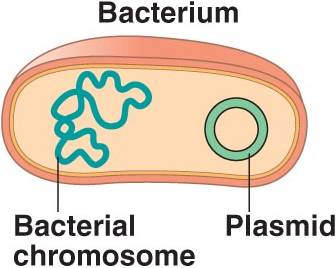
Bacteria are small, single celled organisms that are made of a fundamentally different kind of cell to all the other Kingdoms.  Bacterial cells are described as being prokaryotic:  they are smaller than other cells, have no nucleus and no membrane-bound organelles (such as mitochondria or chloroplasts).  Bacteria cells have a cell wall containing a cell membrane but their cell wall does not contain any cellulose.  Instead the bacterial cell wall is made mostly of a molecule called proteoglycan a molecule is only found in bacterial cells.

Image

Bacteria cells contain DNA (all living things use this molecule as their genetic material) but the key idea is that bacterial DNA is not contained inside a nucleus.  Bacterial DNA is in the form of a single circular ring that just floats around in the cytoplasm of the cell.  This circular ring of DNA is sometimes called the bacterial chromosome (but I dislike this term as the DNA molecule in bacteria is not wrapped around a scaffold of protein as in eukaryote cells). Some bacteria contain small additional rings of DNA that are called plasmids.   These plasmids can be transferred from one bacterial cell to another, and can also be used as a vector in genetic engineering.

ImageImage


Examples of bacteria mentioned in the specification are Lactobacillus bulgaris a rod–shaped bacterium used in the production of yoghurt and Pneumococcus, a spherical bacterium that is the pathogen that causes the infectious disease pneumonia.

Remember that some bacteria are autotrophic and can carry out photosynthesis but most feed by absorbing material through their cell walls.

Animals

Animals by definition are multicellular organisms.  Animal cells do not have a cell wall and do not contain chloroplasts and so cannot photosynthesise.  Animals are often able to move from place to place and have a nervous system.  Animal cells can store carbohydrate in liver and muscle cells in the form of a storage polysaccharide called glycogen.

The examples of animals mentioned in the specification are humans, housefly and mosquito.

Plants

The plant kingdom also contains organisms that are multicellular.  In contrast to animals, plant cells do photosynthesise and do contain chloroplasts.  Plant cells have a cell wall made of the polysaccharide cellulose.  Carbohydrates are stored in plant cells in the form of starch and are transported in the phloem as a sugar called sucrose.

The examples of plants mentioned in the specification are maize, peas and clover.  Maize is a wind-pollinated flowering plant and peas and clover are interesting because they are leguminous plants.  If you remember your work on nitrogen-cycle from E summer, you will know that leguminous plants contain root nodules that contain nitrogen-fixing bacteria.

Fungi

Fungi are a group of organisms that include moulds, mushrooms, toadstools and yeasts.  They are made of cells with a cell wall made of chitin and a nucleus.  Fungi do not photosynthesise and do not contain chloroplasts.  They feed by secreting digestive enzymes onto the food material they are living on and then absorbing the products of digestion:  a process called saprotrophic nutrition.  Fungi store carbohydrate in the form of glycogen.

Multicellular fungi such as Mucor are often organised into a mycelium, a mesh of thread-like structures called hyphae.  Each hypha is a structure containing many nuclei.  Some fungi such as the yeasts used in the brewing and baking industries are single-celled.

Image

Protoctists

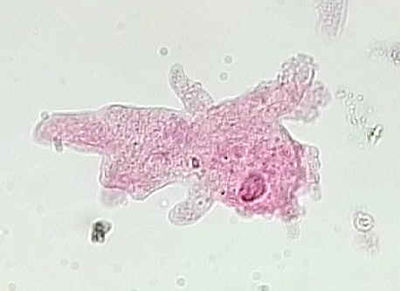
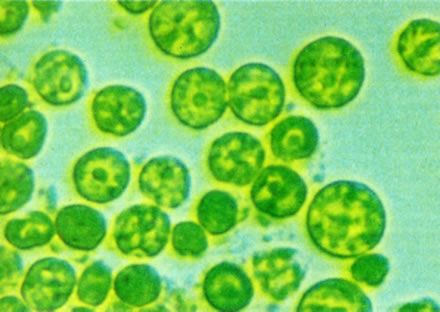
This is the least interesting of the 5 Kingdoms (which is saying something…..)  Protoctists are all single celled organisms but unlike bacteria they are made of eukaryotic cells: cells with a nucleus and organelles like mitochondria and chloroplasts.  Some protoctists like Amoeba share many features with animal cells while others like Chlorella are more plant-like and contain chloroplasts to photosynthesise.  Some protoctists are pathogenic for example Plasmodium, the single celled organism that causes the disease Malaria.

ImageImage


An Amoeba cell on the left and some Chlorella cells on the right.

Hormones: Grade 9 Understanding for IGCSE Biology 2.94 2.95B

Hormones are defined as “chemicals produced in endocrine glands that are secreted into the bloodstream and cause an effect on target tissues elsewhere in the body”.  They play a wide variety of roles in the healthy functioning and development of the body.

Image

The iGCSE specification only really mentions a small number of hormones so these are the ones I will focus on in this post.

ADH (anti-diuretic hormone) (Separate Biologists only – not Combined Science)

ADH is secreted into the blood by an endocrine gland at the base of the brain called the Pituitary Gland.  The stimulus for the release of ADH into the blood comes from the hypothalamus (a region of brain right next to the pituitary gland) when it detects that the blood plasma is becoming too concentrated.  This might be caused by the body becoming dehydrated due to sweating.  ADH travels round the body in the blood until it reaches its target tissue which are the cells that line the collecting ducts in the nephrons in the kidney.  ADH increases the permeability of the connecting duct walls to water, thus meaning more water is reabsorbed by osmosis from the urine in the collecting duct and back into the blood.  This results in a small volume of concentrated urine being produced.

Adrenaline

Adrenaline is secreted into the blood by the adrenal glands in situations of danger or stress..  The adrenals are found just above the two kidneys on the back of the body wall.  Adrenaline secretion is controlled by nerve cells that come from the central nervous system.  Adrenaline is often described as the “fight or flight” hormone as its effects are to prepare the body to defend itself or run away from danger.  There are receptors for adrenaline in many target tissues in the body but some of the most significant effects of adrenaline are:

  • affects the pacemaker cells in the heart causing an increase in heart rate
  • shifts the pattern of blood flow into muscles, skin and away from the intestines and other internal organs
  • decreases peristalsis in the gut
  • causes pupils to dilate in the eye
  • increases breathing rate in the lungs
  • promotes the passing of urine from the bladder

Insulin

Insulin is a hormone made in the islets of Langerhans in the pancreas.  It plays a vital role in the homeostatic control of the blood sugar concentration.  The pancreas will secrete insulin into the blood when the blood glucose concentration gets too high. There are many cells in the body with insulin receptors but the main target tissue for insulin is the liver.

Insulin causes the liver (and muscle) cells to take glucose out of the blood and convert it into the storage polysaccharide glycogen. This results in a lowering of the blood glucose concentration: a good example of the importance of the principle of negative feedback in homeostasis

Testosterone

Testosterone is a steroid hormone made by cells in the testes of males. It is the main hormone of puberty in males resulting in the growth of the reproductive organs at puberty as well as the secondary sexual characteristics (pitch of voice lowering, muscle growth stimulated, body hair grows etc.)

Oestrogen

Oestrogen is a steroid hormone made by the cells in the ovary that surround the developing egg cell in the first half of the menstrual cycle.  In puberty it causes the development of the female secondary sexual characteristics (breast growth, change in body shape, pubic hair etc.) but in the menstrual cycle, oestrogen has a variety of important effects.  It stimulates the rebuilding of the uterine endometrium (or lining) to prepare the uterus for the implantation of an embryo.  Oestrogen also affects the pituitary gland and can cause the spike in LH concentrations that trigger ovulation on day 14 of the cycle.

Progesterone

Progesterone is also made in the ovary but at a different time in the menstrual cycle.  It is secreted by cells in the corpus luteum, a structure found from day 14 onwards after the egg has been released in ovulation.  Progesterone has two main target tissues:  it maintains the thickened lining of the endometrium in the uterus ready for implantation.  Progesterone also causes the pituitary gland to stop secreting the hormones FSH and LH so a new cycle is never started.  It is for this reason that progesterone can be used in women as a contraceptive pill.

FSH (Follicle-Stimulating Hormone (Separate Biologists only – not Combined Science)

FSH is a hormone released by the pituitary gland underneath the brain.  The target tissues for FSH are in the testis (males) and ovaries (females).  In males FSH plays a role in the growth of the testes allowing sperm production to start.  In females, FSH is the hormone released at the start of the menstrual cycle that causes one of the immature egg cells in an ovary to grow, develop and so become surrounded by follicle cells prior to ovulation.

LH (Luteinising Hormone) (Separate Biologists only – not Combined Science)

LH is a second reproductive hormone released by the pituitary gland into the bloodstream.  In males, it stimulates the production of testosterone in the testes.  In females, it is released only on days 13 and 14 of the menstrual cycle and it is the hormone that triggers ovulation.

Water cycle: the simplest topic in IGCSE Biology and now removed from the specification

I am wary of writing a post about the water cycle as I so rarely teach it.  It seems too much like common sense to me to require any elaboration in class, but perhaps writing this post will sooth my guilty conscience for Y10 and Y11 students?

Image

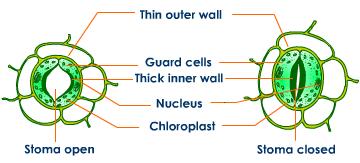
The processes that happen in the water cycle are almost all nothing to do with Biology.  Water evaporates from lakes, streams and the sea.  Evaporation is when thermal energy from the sun changes water from a liquid to the vapour state.  The warmer the day, the more evaporation will occur.  The biological component here is that water evaporates from the above ground parts of a plant.  This process is called transpiration and mostly happens through the stomata (tiny pores in the lower epidermis of the leaves).  Geographers like to combine “transpiration” with the “evaporation” of water direct from the soil to come up with the exciting term “evapotranspiration”.  Water vapour condenses in the atmosphere to form clouds and then water falls as a liquid as rain/snow/hail which can be combined together as precipitation.

That’s the water cycle for you:  couldn’t be much simpler really, could it?

Just to finish, check your A* understanding of transpiration by answering these questions – if you are feeling really digital, why not add the answers as a comment at the foot of this post?

1) When are stomata open in the leaf and when do they close?

2) What four environmental factors can speed up rates of transpiration?

3) What is the name of the experimental set up that can be used to measure transpiration rates?  (Does it actually measure transpiration rate or does it really measure something else entirely?)

4) In what ways would you think of transpiration as a “necessary evil”?

Image

Last week of work for Biology IGCSE students

This is the final week of work for all iGCSE year 11 Biologists.

Image

For the D block boys I teach, think back to those first few days at the start of F block when you had your new uniforms that didn’t fit and consider how much you have changed and learned in the intervening years.  Now with just one final week of Biology revision to go, this is the time to make those final steps in your journey to an A* grade.

It is so easy when the GCSE exams are almost done to relax, to ease up a little and not give of your best this week.  Please don’t do this – there is plenty of time for relaxing and easing up in late June, July and August.  You can still make a big difference to your chances next Monday if you can keep working hard for the final few days.

1) If you need more example of past paper 2s, please get in touch via email/Twitter or by commenting on the blog.

2) If you want to go through any past papers you have completed with me, contact me to fix up a time to meet up.

3) Why not have a go at one of my Zondle revision challenges this week?; next one is Monday 9pm – see Twitter feed for details of how to register.

4) Keep looking over your revision notes, keep practising questions and focus your revision now on the topics most likely to appear.  See my earlier post on question-spotting for paper 2 if you haven’t already.

Platelets and Blood Clotting – Grade 9 Understanding for iGCSE Biology 2.64B

There is a specification bullet point in bold (paper 2 only) about blood clotting and the role of platelets, and students are sometimes not sure to what level of detail is needed for a full GCSE understanding of this topic.  Well the good news is that the only questions I can recall are very straightforward indeed.  But in this post I will give you a little more detail than the minimum needed for A* answers so that you can be confident you are completely clear on this part of the specification.

Why does blood need to clot?

Capillaries have a very thin wall (one cell thick in fact) so can easily tear and get damaged.  This means that damage causes blood to leak into tissues forming a bruise and if the skin is broken, blood can be lost from the body entirely.  Blood clotting is the response in the blood that ensures that blood loss is minimised and also that the time micro-organisms have to get into the blood stream is kept as short as possible.  The surface of the skin is covered with millions of pathogenic organisms (mostly bacteria) all waiting for the chance to get into the blood stream through a cut or tear.

What are platelets?

Platelets are small fragments of cells found in bone marrow that then get into the blood and are carried round in the plasma. They are not entire cells as they lack a nucleus but they do play an essential role in blood clotting.

How does blood clotting work?

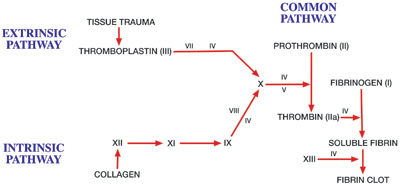
When the lining of a capillary is broken, platelets initially stick to the site of damage.  They then trigger a series of reactions in the blood plasma that causes a clot to form.  The details of how this works are too complicated to go into here but the basic idea is that in the blood plasma are a whole family of proteins called clotting factors. There is a cascade of reactions such that one clotting factor is activated and in turn, activates the next in the sequence.   The final reaction in the clotting cascade is that a soluble protein called fibrinogen is converted into an insoluble fibrous protein called fibrin.  Fibrin forms a mesh around the platelet cap covering the site of damage and this mesh traps red blood cells forming the final clot.

Image

The roman numerals on the diagram above refer to clotting factors and each in turn is activated.  You can see the final stage of the cascade is that soluble fibrin is converted into the fibrin clot.

Many of you will know of the disease where blood doesn’t clot called haemophilia.  The commonest type of haemophilia is a genetic disease where patients cannot produce clotting factor VIII.  This means one step in the clotting cascade does not work and so the blood cannot clot normally.

(Extension idea:  find out the link between Haemophilia, the British Royal family and the 20th century history of Russia)