
Category: IGCSE Biology posts
A Simple Reflex Arc: Grade 9 Understanding for IGCSE Biology 2.90
GCSE Biology students often find the reflex arc a difficult topic in the section on human coordination and response. This is because it is the only type of response they learn about and doesn’t really fit into a sensible flow of ideas on the various types of behaviours organisms can show. But it is not too complicated, at least if you restrict yourself to ideas that might be tested in the iGCSE exam.
Prior Knowledge (you need to understand these things before you can appreciate a reflex arc)
- basic structure of a neurone/nerve cell
- three different kinds of neurones – sensory, motor and relay – and where they are found in the body
- nerve impulses are electrical events that travel at up to 100ms-1 along nerve cells but cross synapses much more slowly by diffusion of a chemical called a neurotransmitter
Reflex responses
Most human behaviours are complex and involve millions of neurones interacting in the brain. Our ability to link stimuli (changes in the environment) with an appropriate response can develop over time, can be modified by past experience and can produce different outcomes depending on the circumstances. For example if you see a fast moving spherical object moving towards your head, you might head it (football), catch it (cricket), hit it (cricket again), duck out of the way (cricket again) or eat it (flying Malteser)
A simple reflex response is much more straightforward: the same stimulus always produces the same response. It does not need to be learned but is innate (you are born with it) and in humans, reflex responses tend to be involved in protecting the body from harm or maintaining posture. The example we look at is called a withdrawal reflex to a painful stimulus e.g. touching a hot plate on a cooker.
The response to this is that you contract muscles in your arm to move your hand away from the hot plate. The key idea is that you will do this before you feel the heat or burn the skin. The sequence of events is
- touch the hot plate (pain receptors stimulated in the skin)
- move your arm away (reflex arc)
- feel the pain (brain receives the nerve impulses and a conscious sensation of pain is felt
The reason that you move your arm away before you feel anything is that your brain is not involved in this response. This produces a rapid, involuntary reaction called a reflex response. The reason the response is so rapid is that at most three neurones are involved in linking the painful stimulus to the response. The arrangement of these three neurones is called a reflex arc.
 The cell that detects the stimulus is called a sensory neurone. One end of this cell is a pain receptor in the skin and the other end of this individual cell is found in the spinal cord (see diagram above) Neurones can be very long cells! The sensory neurone forms a synapse (junction) with a relay neurone found entirely in the grey matter in the centre of the spinal cord and this in turn synapses with a motor neurone. The cell body of the motor neurone is on the spinal cord and the other end of this individual cell is a synapse with a skeletal muscle in the arm.
Synapses are the things that slow nerve impulses down and as this whole pathway only includes two synapses (sensory-relay and relay-motor) the response will be as fast as possible. The response is involuntary as the brain is not involved.
In humans, we can modify most reflex responses using the conscious parts of our brain. As the sensory neurone synapses with the relay neurone in the diagram, it will also synapse with other neurones carrying nerve impulses up to the brain. This is why touching a hot plate will hurt (the feeling of pain is in the brain). There will also be neurones from the brain that can modify the synapse between the relay and motor neurone. If I told you that I would pay anyone who can touch a hot plate for 2 seconds $10,000 (although of course I don’t have $10,000) many of you would be able to force yourself not to pull your arm away from the hotplate when you touch it. You could overcome the reflex response with signals from your brain which would know how much fun you could have with $10,000.
Carbon Cycle – Grade 9 Understanding for IGCSE Biology 4.10

The Carbon cycle should really be much simpler to understand than the Nitrogen cycle I posted about yesterday. This is because the processes involved in moving carbon atoms from one compartment to the next in an ecosystem are more straightforward. There are four processes mentioned in the specification and you need to make sure you understand each.
- Photosynthesis: only happens in producers, takes CO2 from the air to produce complex molecules (carbohydrates/proteins/fats) that can be passed up food chain.
- Respiration: happens in all organisms (producers, consumers, decomposers) and turns carbohydrates into carbon dioxide
- Combustion: fossil fuels and plants can be burnt for fuel releasing carbon dioxide into the atmosphere
- Decomposition: two types of decomposition – in aerobic conditions decomposer organisms (bacteria/fungi) convert complex molecules in faeces/dead organisms into carbon dioxide: in anaerobic conditions, dead organisms can be turned into fossil fuels.
If you want to draw a carbon cycle from scratch to check you understand it, follow the procedure below.
1) Draw the following boxes showing where carbon atoms are found in an ecosystem – CO2 in air, carbon compounds in plants, carbon compounds in animals, fossil fuels and limestone, detritus in soil
2) Draw arrows linking the boxes with the following labels: photosynthesis, respiration, feeding, combustion, death and decay, death and no decay
That’s about as complicated as it gets.
Warning: Do not under any circumstances draw an arrow from the detritus in the soil directly to plants. Plants do not absorb any carbon containing molecules from the soil into their roots. Honestly, please believe me they don’t however much you want them to…. It would make the cycle more straightforward but they don’t – sorry. The only carbon-containing molecule plants absorb from their environment is CO2 and that as you all know is absorbed from the air in leaves in the process of photosynthesis.
Zondle quiz on carbon cycle to follow in due course: keep working hard! (I am jealous of those of you in Portugal at the moment although weather has been fine today in Northants!)
Bacteria of the Nitrogen Cycle: Grade 9 Understanding for GCSE Biology 4.11B
Here is my paragraph about each of the four sets of bacteria involved in the Nitrogen Cycle. 
1) Decomposers (Putrefying Bacteria) These aerobic bacteria live in the soil. When an organism dies decomposers digest the proteins and DNA that are found in the cells of the organism and produce ammonium ions (NH4+) as a waste product. Decomposers will also break down the molecules in animal faeces and will decompose the urea in animal urine into ammonium ions.
2) Nitrifying Bacteria These are also aerobic bacteria that live in the soil. They get their energy by converting ammonium ions into nitrates (via an intermediate ion called a nitrite). Nitrifying bacteria are essential for the Nitrogen cycle because the nitrates they form are the ions that plants will absorb through their roots. Nitrates will be used by the plant to make amino acids, proteins and DNA and these can pass up food chains.
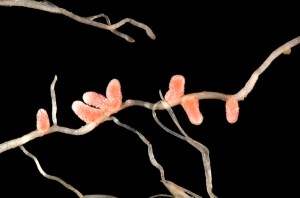
3) Nitrogen-fixing Bacteria The picture now gets a little more complicated. Nitrogen-fixing bacteria can convert atmospheric nitrogen found in air spaces in the soil into ammonium ions (see diagram above). These bacteria live in the soil and respire aerobically like all the bacteria mentioned so far. Some nitrogen-fixing bacteria have formed a symbiotic relationship with a family of plants that includes peas, beans and clover. These plants are called leguminous plants and have small nodules in their roots that contain the nitrogen-fixing bacteria. The relationship is a mutualistic one as both parties benefit. The plant benefits as these bacteria produce nitrate ions that the plant can absorb and use to make proteins and the bacteria benefit as they are protected from soil predators and have a stable environment in which to live.
 4) Denitrifying bacteria
These are anaerobic bacteria that thrive in conditions where there is little oxygen in the soil. This often happens when the soil becomes water-logged so all the air spaces are flooded. Denitrifying bacteria are “bad news” for Nitrogen cycle as they get their energy by taking nitrates from the soil and converting them into nitrogen gas. This obviously reduces the nitrate available to the plants with roots in the soil and this is one of the reasons farmers like to keep soil well aerated for their crops.
I will post a quiz on Nitrogen cycle on Zondle later this evening and so if you want to test your understanding of this potentially tricky topic, I would suggest you have a go at my quiz. There are also plenty of past paper questions on Nitrogen Cycle in the red question booklet.
Nitrogen cycle for IGCSE Biology: Grade 9 Understanding 4.11B
I will make a blog post on each of the three “cycles” you need to know about for iGCSE. By far the most complicated is the Nitrogen cycle, so we might as well start there….
The first bit of understanding you need to is be clear the difference between how energy moves through an ecosystem and how matter (i.e. atoms) are exchanged between organisms and their environment. Energy in the ecosystems moves in a linear flow: there is no recycling of energy. The energy comes in at one end (in the producers through the process of photosynthesis) and is ultimately all lost as heat to the environment through the process of respiration. There is no possible way energy can be recycled. The “circle of life” that students like so much from Disney certainly does not apply here…. People find this idea very difficult to appreciate. All the time students will tell me that the energy in dead plants and animals goes into the soil and is then absorbed through the roots of plants: “it’s the circle of life sir” they earnestly tell me. And in the words of the late, great Amy Winehouse, I say “NO,NO,NO”…
Matter on the other hand is recycled through the ecosystem. The individual atoms that make up your body (H,O,C,N,S etc.etc,) have all been in other organisms and indeed will be again in the future. You took them in through your food and use these atoms to build the molecules that make up your cells. But ultimately all these atoms will leave your body either through metabolic processes or when you die and are decomposed. You could draw up a cycle for any of the atoms that are found in living things but your specification only requires you to understand two. How are carbon atoms cycled – the Carbon cycle – and how are nitrogen atoms cycled – the Nitrogen cycle. (You will also look at the Water cycle as well…..)
Things to understand about the Nitrogen Cycle:
1) Which molecules in living things contain nitrogen atoms?
Well the answer is fairly simple. Proteins are polymers of amino acids. Amino acids all contain an -NH2 group (amine group) and so Nitrogen is found in proteins. The bases in DNA (Adenine, Cytosine, Guanine and Thymine) are described as nitrogenous bases and so they contain nitrogen too.
2) Where are nitrogen atoms found in the ecosystem other than in the molecules of living organisms?
This is more complicated. Nitrogen gas makes up 78% of the atmosphere so clearly there is a lot of nitrogen in the air. In the soil, there will be urea from the urine of animals and urea contains nitrogen. There are also a range of ions found in the soil that contain nitrogen: the two most important are ammonium NH4+ and nitrate, NO3-. (I don’t know how to do subscript and superscript in WordPress and so you will have to excuse the rather ugly molecular formulae)
3) How do nitrogen atoms move from the abiotic (non-living) parts of the ecosystem and into the organisms?
There is only one way nitrogen atoms can move from the abiotic environment and into the organisms in an ecosystem. This is via plants that can absorb nitrate ions from the soil in their roots. This is a slight simplification but it will do at the moment. Look at the diagram above and find the arrow that shows assimilation of nitrates from the soil into plants.
4) How many different kinds of soil bacteria are involved in cycling nitrogen?
You need to know about four different kinds of bacterial that live in the soil that play a role in recycling nitrogen. Use the diagram above and your notes to describe the role each of these organisms play in the cycling of nitrogen atoms in the ecosystem.
- Decomposers (Putrefying Bacteria)
- Nitrifying Bacteria
- Nitrogen-Fixing Bacteria
- Denitrifying Bacteria
I am off to have my supper: another post about these bacteria will appear here later tonight or tomorrow. Please don’t read it until you have tried to write down a paragraph on each of the four types of bacteria in the bullet point list above.
Experimental Design questions IGCSE Biology
I have been posting comments about the questions that appear year after year on iGCSE Biology papers. Questions like the one below are found in every past paper we have. I call these the “Design an experiment to” questions for obvious reasons…..
“Rivers are sometimes polluted by warm water from power station outflows. This is known as thermal pollution and can affect the growth of plants. Design an experiment to investigate the effect of water temperature on the growth of plants. 6 marks. November 2010”
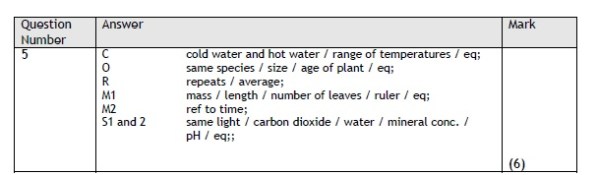
As you all know, the mark scheme for this kind of design an experiment question is based around the acronym CORMS.
C – how do you change the independent variable?
The independent variable is the thing you are going to change to see its effect. In this experiment it is the temperature of the water. So how are we going to change it? Well it might appear obvious but you need aquatic plants living in water baths at a range of temperatures, say 10,20,30,40,50,60 degrees. Try to make your independent variable continuous if it is possible – the range of temperatures above is much better than just one set of plants in hot water, another in cold water.
O – what organisms (or other biological material) will you use?
To get this mark you will need to say something about the plants you will use in your investigation. For the experiment to produce reliable results, there are many features of the plants that will need to be kept the same in each water bath. Same species, same age of plants, same starting size, same surface area of leaves etc. There are other factors too about the plants that need to be controlled. Can you think of any others?
R – reliability
In order to produce reliable results you will need to set up multiple repeats of each experiment so anomalous readings disappear as you average your results. How would you do this? Well in the example above, I would set up 5 identical water baths at each temperature. We are investigating six different temperatures so we will need 30 water baths. Don’t worry about this. For research as vital as this fascinating experiment, no expense should be spared……
M – how are you going to measure the dependent variable?
There are often two possible marks for this and you will see M1 and M2 on the mark schemes. The key idea is often the same however (there’s a shock) The first mark is for identifying what you will measure about the plants to measure growth. There are lots of alternatives depending on what kind of plant you are using. I am picturing a small floating algae growing in my water baths so I would measure the mass of the plants. (Dry mass would be better but this would lead to destructive sampling – plants won’t grow further if you dehydrate them completely in an oven before weighing them……) You could measure the height of the stem of a plant, or the total surface area of water covered. It doesn’t really matter which thing you choose as long as it is a sensible measure of growth. What will M2 be awarded for? Well it is essential you leave all 30 waterbaths for exactly the same length of time between measurements. How frequently will you measure the growth of your plants? Every hour would be too often, so perhaps every day would be sensible. So a statement that says “use a mass balance to measure the total mass of the plants in each water bath every day for a period of 10 days” will be certain to get both M marks…
S – what factors do you need to standardise to make the experiment a fair test?
You will have mentioned some of these “fair test” factors in the mark point O above. Now it is time to show that you understand what factors other than the temperature of the water will effect the growth of your plants. Growth of plants is done by photosynthesis so I would be aiming to show you understand the other factors that will effect rates of photosynthesis: i.e. light intensity. light wavelength and carbon dioxide concentration. All three should be kept constant and I would say how: same lamp at the same distance from the water baths, carbon dioxide in water controlled by dissolving same mass of sodium hydrogencarbonate in the water. There are often two S marks but by stating all three important control variables this should guarantee we get both.
Now I have written this post without looking at the mark scheme. “Promise…. Honestly Sir I wouldn’t cheat myself like that…..” But here it is and look we would have got full marks. Full Marks = A* #result
Immunity: Grade 9 Understanding for Biology IGCSE 2.63B
The most complicated topic in the human transport topic is certainly immunisation. In a previous post, I said you should be able to answer the following two questions:
Why is it that the first time your body encounters measles virus, you suffer from the disease measles? Why will someone who has had measles as a baby (or been immunised against it) never contract the disease measles even though the virus might get into their body many subsequent times?
I thought in this post I should attempt to expand a little so as to provide answers to these two important questions. This understanding is quite complex for IGCSE but you cannot really see how immunity works unless you can work through each stage in the process.
Let’s pretend you are a new born baby and you get measles virus particles into your bloodstream from contact with an infected person. Remember viruses are not living organisms as they are not made of cells and have no metabolism. All they are is a tiny particle made of DNA (genetic material) surrounded by a protein coat.
Look up a picture showing the structure of a virus particle in Google. This one comes from science learn.org.nz

The “spikes” on the surface of the virus particle are proteins that are essential to allow the virus to get inside a host cell. But they can also act as antigens allowing the immune system to recognise the virus as a foreign object and so mount an immune response to it.
In the body there are hundreds of billions of white blood cells called B lymphocytes. Each B lymphocyte is able to divide by mitosis over and over again to form a clone of cells called plasma cells. These plasma cells secrete a type of protein called an antibody which has a shape specific to the shape of the antigen such that it can bind to the antigen and neutralise it. (Can you think of another example in the specification where the shape of a protein is essential to its function?)
Now here is the first key piece of information needed in understanding immunity. Each B lymphocyte is only able to produce an antibody molecule with one particular shape. So the reason you need hundreds of billions of lymphocytes is to be able to produce antibodies that have the correct shape to combat hundreds of billions of possible shaped antigens on a lifetime of pathogen exposure.
Go back to your newborn baby exposed to measles virus. There might be only a handful of B lymphocytes in the babies’ body that just happen to be able to produce a shape of antibody specific to antigens on the surface of the measles virus. Before any antibodies can be produced, the “correct” B lymphocyte has to come into contact with measles virus particles and be activated. It then has to divide many times by mitosis to form a clone of plasma cells and the plasma cells have to differentiate and start producing antibodies. This whole process is called the primary response (first exposure hence primary) and it may take up to 8 days before any antibodies start appearing in the babies’ blood. What are the measles virus particles doing all this while? Well they are infecting host cells, damaging them and causing disease. This is why the baby will suffer from the disease measles.
The second key piece of information for immunity is this: when the B lymphocyte that has been activated divides by mitosis to form a clone, not all the cells produced form antibody-producing plasma cells. About 25% of the clone just remain as lymphocytes and are called memory cells. This is because they are long-lived cells that account for immunological memory.
Let’s pretend the baby gets better from measles due to the antibodies produced in the primary response. What happens if years later, the child goes to school and meets measles virus again for a second time? You all know that the child won’t get the disease measles this time. This is because the immune response is different second time round – the secondary response. The secondary response to antigen is quicker (no 8 day delay), larger (more antibodies made) and lasts for longer. This is because in a secondary response there are not just a handful of B lymphocytes in the body capable of making antibodies to combat measles virus. There are now millions of memory cells left over from the primary response that can all immediately “leap into life” and start making antibodies. These antibodies will be produced so quickly and in such large numbers that the virus particles will be eliminated before they have time to cause harm and disease. No harm caused to host cells therefore no disease measles this time round!
Finally, you know that you can have immunity to measles without having had the disease. This is because everyone in the UK sitting GCSE exams this summer will have been immunised against measles virus as a baby. You were injected with antigens from the surface of measles virus particles when you were a baby. These antigens by themselves could not give you measles (why not?) but they did cause a primary response to occur and memory cells to measles antigens be formed. So now if you do encounter measles virus, your body will mount a secondary response and you won’t get the disease. #result
Common misconception:
When answering questions on this topic in exams, candidates often think that it is the antibodies produced in the primary response that are left over to stop you getting measles later in life. Look at a graph showing primary and secondary responses to antigen such as the one below.
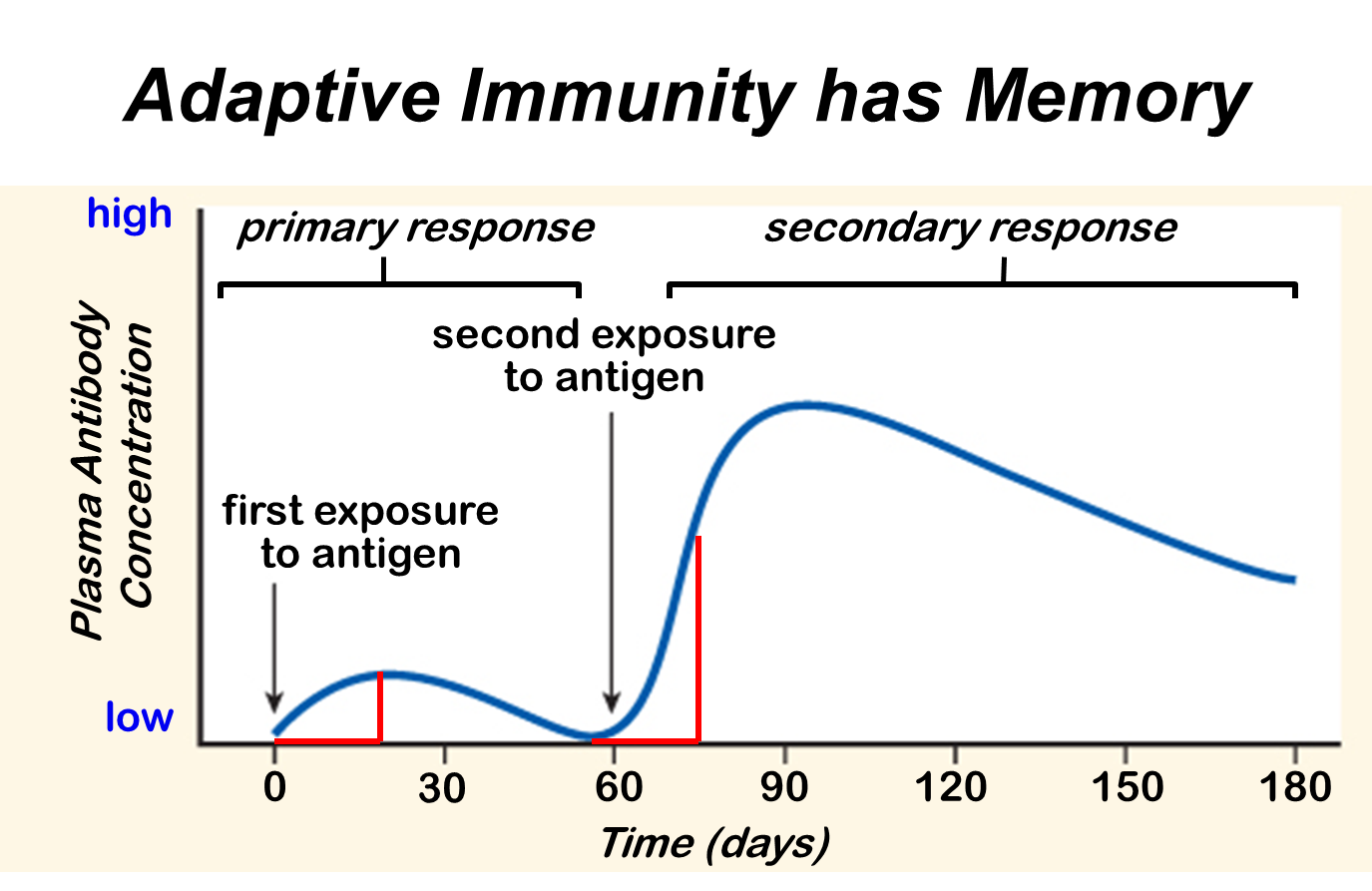
This graph shows how antibody concentration in the blood changes in the primary and secondary immune response.
Antibodies are proteins and you can see they have a half-life in the blood of a few weeks. (The liver breaks down proteins in the blood as one of its many functions) So all the antibodies from a primary response will have been removed within a few months of the first exposure. Immunity can last a lifetime and this is because memory cells can survive as long as you do. Unlike antibodies they can hang around in your blood and lymph nodes for the rest of your life. If you live to be a hundred, you still won’t catch measles more than once.
This is a tricky topic so do please comment on this post if you have any questions. Work hard at revision – it will be worth it in the end….. (At least with Biology revision, it is fascinating stuff isn’t it?)
Human Transport IGCSE – a few pointers for Grade 9 Understanding 2.59, 2.63B, 2.69
I have had a request from a student to write about the level of details needed in the section of the specification on human transport. Here are the relevant bullet points from the specification, together with a very brief outline of the kinds of details to learn:
- Blood composition 55% plasma, 45% cells (red blood cells, white blood cells and platelets)
- Plasma functions – transport of dissolved carbon dioxide, dissolved glucose, urea, salts etc.and transport of heat around body
- Red Blood cells – no nucleus, each cell packed full of 250,000 molecules of haemoglobin, biconcave disc shape to squeeze through narrow capillaries
- Phagocytes/Lymphocytes – two types of white blood cell, phagocytes engulf foreign organisms in blood by phagocytosis, lymphocytes do many functions in defending the body against disease but many produce antibodies
- Vaccination with reference to memory cells and primary v secondary response (see below)
- Functions of clotting and role of platelets (prevent infection, stop blood loss – platelets play central role in clotting as they produce chemicals that are needed for clotting cascade
- Structure and function of the heart (learn names of chambers, blood vessels, names of four sets of valves and what they do)
- Role of adrenaline in changing heart rate during exercise (speeds it up to maximise cardiac output to muscles)
- Structure and functions of arteries/veins/capillaries (simple bookwork)
- General plan of circulation including heart, lungs, liver and kidneys (see below)
The two sections that are perhaps hardest to interpret are the ones on vaccination and the general plan of the circulation.
1) Key terms in vaccination to understand:
- Antigen
- Antibody
- Lymphocyte
- Clonal Selection theory
- Memory cells
- Effector cells (plasma cells)
- Primary response
- Secondary response
At the end of the process, you should be able to provide a clear concise answer to the following question?
Why is it that the first time your body encounters measles virus, you suffer from the disease measles? Why will someone who has had measles as a baby (or been immunised against it) never contract the disease measles even though the virus might get into their body many subsequent times?
2) The blood vessels involved in the four organs mentioned are described below.
Heart – receives blood from the coronary arteries which branch off the aorta before it has even left the heart: Why doesn’t the cardiac muscle in the heart just get the oxygen and nutrients it needs from the blood in the chambers?
Lungs – pulmonary artery takes blood from right ventricle to the lungs, pulmonary vein return oxygenated blood to the heart and empty it into the left atrium. What is unique about the composition of the blood in the pulmonary artery?
Liver – has a most unusual blood supply. There is a hepatic artery that branches off the aorta and brings oxygenated blood to the liver. Blood also goes to the liver in the hepatic portal vein which brings blood from the small intestine. Blood in the hepatic portal vein will contain lots of dissolved glucose and amino acids, both of which are processed in the liver. Deoxygenated blood leaves the liver in the hepatic vein. Find a diagram to show the arrangement of these three blood vessels.
Kidney – straightforward blood supply in that there is a renal artery and a renal vein. (important idea is that the renal artery is much much bigger than you would expect from the size of the organs: 25% of the cardiac output of blood flows through the kidneys on each circuit) Why do you think this is?
I hope this helps – more to follow when I get home from my holidays tomorrow afternoon…..
How to score full marks on IGCSE Genetics questions? 3.23 3.25
This will be my final blog entry from Dubai. I will be flying home tomorrow with spirits refreshed by this amazing country and the positive and dynamic people I have met.
There will be a Mendelian genetics question in one of the two EdExcel IGCSE Biology papers. Examiners are people who like to stick to tried and tested formulae with setting questions and it’s always worked in the past, so why change now…?
You should welcome the genetics question when it appears for two reasons:
- If you understand what is going on and
- if you are prepared to set the answer out correctly (see below)
you can almost guarantee that you will score all the marks! And that’s what we want as full marks = top grade
The understanding you need for these questions is actually quite detailed and beyond what I can explain in this post. Check your understanding by answering the following questions:
- What is the difference in meaning between a gene and an allele?
- Why does the genotype of a person, plant, fruit fly or rabbit contain two alleles for each gene?
- What is different about the genotype of a gamete compared with every other cell in the body? Why are gametes different?
- How would you explain what is meant by a recessive allele?
- If two alleles are codominant, what does this mean? Give me a specific example in which this pattern of inheritance is found.
Good, I am assuming you have answered these questions fully using important terms like diploid, homologous chromosomes, phenotype, heterozygous correctly……
In which case, all that remains is to remind you how to set out a genetic diagram. I am not usually a proponent of slavishly following protocols but in producing a genetic diagram in an exam, you certainly should. There are usually five marks available for a question like this and only one of the marks is for getting the right answer. 20% = E grade and that is not what we want.
- Start with the phenotype of the parents – write mother and father’s phenotype down in full
- Then underneath the phenotype, write the genotype of the parents. (The letters to use for the two alleles will be given in the question and always use the letters suggested, don’t make up your own. Slavish following of protocol remember)
- The next bit is the first tricky bit. Write the alleles present in the gametes. Remember gametes are formed by meiosis and so only contain one member of each homologous pair of chromosomes – they will only have one allele from each pair in each cell. Draw circles around each gamete to show the examiner you understand they are individual cells.
- Draw a fertilisation table (called a Punnett square after Reginald Punnett – who says you don’t learn anything useful at GCSE?)
- Write out the offspring genotypes from the table
- Write out the offspring phenotypes underneath your list of offspring genotypes showing how they match up.
Answer the question. If asked for a probability, express it as a fraction or percentage. Those of you who follow the horses are sometimes tempted to write the probability as odds, but “3-1 the dwarf rabbit, 3-1 on the field” is not a good answer in your Biology exam…
If you do this you will always get all the marks.
Please remember:
The ratio of 3:1 is only found in the offspring of two heterozygous parents. Sometimes students seem to think that all genetic crosses produce offspring in this ratio. This doesn’t make any sense if you think about it for a moment but in an exam, thinking for a moment is not always easy.
If you look at phenotypes in a population, the dominant phenotype is not always more common that the recessive phenotype. This is something people find really difficult to get their head around. Think of the disease polydactyly in which suffers have an extra digit (e.g. Anne Boleyn) Polydactyly js caused by a dominant allele but I bet in your class at school, people with 5 digits on each hand are more common than those with 6. (A joke about schools in the Fens north of Cambridge has been removed in the interests of good taste)
As fertilisation is random, offspring will never exactly fit the expected Mendelian ratio. If you are given a cross in which peas produce offspring and 495 are smooth and 505 are wrinkled, you do not have to work out some complicated theory to explain this ratio. It will be a 1:1 ratio with the small differences due to random fertilisation
Good luck and keep working hard! Comments welcome as always – it does show me that someone is reading this stuff…….
Evolution for IGCSE Biology: Grade 9 Understanding 3.38 3.39
There are a few topics which you can pretty much guarantee will be tested somewhere in the two iGCSE Biology papers. There will be a genetics problem to solve (see later post) and in almost every year there is a question about the process of natural selection. These questions tend to be based around either the evolution of antibiotic-resistant strains of bacteria or an animal example based around some adaptation.
Questions on evolution are usually worth four or five marks and I would suggest you always answer them with bullet points. Mark schemes for these questions are often similar and once you have revised the topic, some time spent with past questions and mark schemes would be time well spent.
Imagine you are set a question about cheetah and high speed running. (Everyone knows cheetah can run for short distances at up to 70 mph: so can the gazelle of course – that’s a coincidence isn’t it?) How did modern-day cheetah evolve to run so fast?
Key ideas to include in your answer:
1) Variation in cheetah population: in any population of cheetah at any point in their evolutionary history, some cheetah will just happen to be able to run a little faster than others. This continuous variation could be due to environmental factors (diet, access to gyms etc.) or it could be due to the combinations of genes they happen to have inherited from their parents, or more likely to a bit of both. Environmental causes of variation are not inherited of course but the genetic ones can be and that’s the key to natural selection.
2) Competition: variation by itself cannot lead to natural selection. If all cheetah survived to breed however slowly they ran, then high-speed cheetah would never have evolved. In my example, cheetah are competing with other cheetah for access to prey species. Gazelle run pretty quick too (I wonder why?) so cheetah who are slower than average will get less food. Conversely if you are a cheetah who just happens due to random genetic variation to be a little quicker than your neighbours, you will get more food, be more healthy and more likely to survive to adulthood.
3) If your particular combination of genes makes you more likely to survive, then you are more likely to breed and pass these genes onto future generations of cheetah. This process is called Natural Selection and it results in certain alleles becoming more frequent in a population over time. In this example, the alleles that produce aerodynamic, long-limbed and muscle-bound cheetah become more frequent over time while alleles building lethargic, over-weight and peaceful cheetah tend not to be passed on as well to future generations.
4) This produces a gradual change in the population over time. Selection is a cumulative process: small changes from one generation to the next can add up to big changes over thousands of generations.
NB This answer does not contain the word mutation and this is quite deliberate on my part. You want to make absolutely clear in your answer that at no point in the history of cheetah, did two slow-running cheetah parents give birth to a “mutant” cheetah with Usain Bolt like qualities. Mutation is a random change in the DNA of an organism and much of the genetic variation described above comes not from new mutations appearing but from the shuffling up of alleles into new combinations in meiosis. These new combinations of alleles can produce new phenotypes and these are the features on which selection can act.
But…… If you are writing about the evolution of antibiotic resistance in bacteria, this can be due to a single mutation. One altered gene can produce an enzyme that will breakdown antibiotic molecules or pump them out of a bacterial cell, so in this example it would be correct to talk about a random mutation occurring in the bacterial population. The key thing here is that these mutations have been occurring randomly for billions of years in bacteria. The mutation is totally independent of the use of antibiotics. All that has happened differently in the past 50 years is that for most of evolutionary history these random mutations would have been harmful to the survival chances of the bacterium unfortunate enough to acquire them. Now in an environment particularly in hospitals flush with antibiotics, these once harmful mutations can give the bacteria a massive selective advantage. Hence the evolution of strains of bacteria in hospitals resistant to a variety of different antibiotics e.g. MRSA and C. difficile
This is an essential topic to get your head around for the exam. Please comment on the blog post if you have any questions or contact me via Twitter.
Good luck!
Eutrophication – the least glamorous topic in IGCSE Biology 4.16 4.17
This is a topic it is easy to overlook in your revision: water pollution by sewage is hardly glamorous and when you combine it with the limited excitement of learning about fertilisers, you don’t have to be a genius to see why many students leave it out. But examiners seem to like eutrophication so it is worth making sure you are going to score full marks on any question they set.
Starting point in your understanding for this topic should be that what limits plant growth in many circumstances, and often in aquatic ecosystems, is the availability to the plant of nitrate ions. A nitrate ion (NO3-) is essential for the plant to make amino acids, and hence proteins and also DNA. Cells need more DNA and proteins to divide and grow so farmers spray extra nitrate ions onto their fields in fertilisers.
Nitrate ions are very soluble in water so if it rains, they can easily dissolve as the rain water passes through the soil a process known as “leaching”. These nitrate ions can thus end up in freshwater, for example streams and ponds where they have exactly the same effect as in the soil – they cause excessive plant growth. The plants in freshwater are often types of algae and if you have far too much nitrate in the water, this can cause an algal bloom. This excessive growth of plants is called eutrophication (or more properly hypertrophication)
Now the eutrophication story then proceeds like this….
If there is an algal bloom, this can eventually cover the surface of a pond so that light doesn’t penetrate to the multicellular plants that live on the bottom, the beautifully named “bottom-dwellers”. No light for these plants means they can’t photosynthesise and so they die. In the water there will be aerobic bacteria that act as decomposers and so if there is loads of dead material in the water, the populations of these bacterial decomposers will rapidly rise to break down the detritus. These bacteria remove dissolved oxygen efficiently from the water as their numbers go up (remember they are aerobic bacteria), so water quality rapidly falls. The lowering oxygen concentration in the water will itself cause animals from small invertebrates to larger fish to die and so a vicious circle is set up: less oxygen = more dead organisms = more decomposers = less oxygen.
The consequences for a pond in these conditions are very damaging. The complex ecosystem involving producers, consumers, food chains and so on is replaced by one with algae, decomposing bacteria and a few organisms that can survive in anaerobic conditions.
Anything that increases the numbers of decomposers in a freshwater ecosystem can cause eutrophication and the consequences described. The commonest cause is agricultural run off from fertilisers (nitrates/phosphates etc.) but untreated sewage can cause similar consequences. The decomposers need to break down the sewage, releasing nitrate ions into the water that cause eutrophication. The murkiness of the water can also kill bottom-dwellers directly and set the whole cycle off.
Eutrophication is a sequential process and often examiners use this question to test your ability to organise your answer properly. I would always answer a four or five marker on this topic with bullet points rather than a paragraph of text. Why do you think this is?
Now make a summary diagram to show eutrophication and answer a few IGCSE questions from the booklet.
Work hard!
 PMG Biology