
Category: General
Feedback on Zondle revision test 3
There were some difficult questions in this quiz tonight and all the players who scored more than 20 out of 30 were doing really well I would say. The questions were meant to provoke thinking and to be stimulating for you rather than all being simple recall of facts. I want to draw your attention to a few of the main ideas.
1) Antigen is a difficult term to define and students often confuse it with the similar word antibody. Antigens are proteins on the surface of an invading pathogen that can trigger an immune response. (For the sake of completion, antibodies are proteins secreted by B lymphocytes/plasma cells that can bind to antigens and so help eliminate them from the body) Have a look at my blog post on immunity which can be found by searching using the tag cloud.
2) This blog post on immunity will also answer the question about why someone can never suffer from the disease measles more than once. Remember this cannot be due to antibodies remaining in the blood stream after the first exposure. I had measles as a 5 year old but all the antibodies produced in this primary response would have disappeared before my 6th birthday. But I will be protected from measles for the rest of my life because of the memory cells I made all those years ago.
3) Very few players knew that malaria was a disease caused by a protistan parasite. This is disappointing as it is a straightforward factual recall and the Plasmodium parasite for malaria is specifically mentioned in the specification in the section on Five Kingdom classification.
4) Almost everyone got almost all of the digestion questions correct so there is little to add here.
5) I put a few tricky questions on the menstrual cycle into the quiz. Now I do know that the hormones FSH and LH are not specifically mentioned and it is actually unlikely that you will be asked on them. But if you are to understand the menstrual cycle to an A* level, you cannot do this without an appreciation of the four hormones that regulate reproductive function: FSH, LH, oestrogen and progesterone.
I will try to write a post for you all on menstrual cycle just to top up your understanding. Keep your eyes on this blog during the week…..
6) The question about which molecules can be made by a plant in photosynthesis was a bit of a trick question – please accept my apologies. The thing I would like you to appreciate is that photosynthesis doesn’t just make glucose (or the storage polymer starch) but actually makes all the biomolecules in the plants’ cells. Glucose, starch, amino acids, proteins, fats, vitamins and DNA are all made by the plant in photosynthesis. (This is yet another reason why the equation that you have to learn for photosynthesis cannot be 100% correct)
7) There were then a few questions on the kidney. Remember if you are ever asked in any context about the movement of water into or out of cells, there is only mechanism by which this can happen. Water never moves by diffusion and is never pumped into or out of cells by active transport. The only mechanism ever for water movement across a cell membrane is via osmosis.
8) Nitrogen cycle often catches people out. It is a vital topic to revise and understand fully as often questions on it can be superb A* discriminator questions. Learn the four types of bacteria that are involved – my two blog posts on the subject should be a help.
Any more questions/comments/queries, please comment on this post and I will get back you asap.
Feedback on Zondle Biology revision challenge part 2
The questions in this revision test were more challenging than last time. I hope that players found them interesting and useful.
The plant transport questions at the start were well answered overall. Osmosis is the only way water can ever cross a cell membrane and although active transport does occur in the root hair cells (pumping mineral ions such as nitrates into the cell against the concentration gradient), water cannot be directly pumped against its concentration gradient using energy from respiration.
The cloning questions were difficult but I think the low scores here were perhaps more to do with problems with my school wifi than with your abilities to answer them! Micropropagation is the way that you learned when a small part of a plant is cut out, sterilised, washed and then added to a culture medium that triggers cell differentiation. You probably did this experiment with explants from a cauliflower. The aim was to produce whole new plants from these small explants. This technique could not work with animals simply because animal’s bodies contain many more types of tissue and have a more complex internal architecture that requires a much more sophisticated genetic programme of development.
I want to talk about a few questions in the latter stages of the test that were not well answered. I am sure there is plenty you can all learn from these.
The first was the one that asked you what was meant by a “diploid cell”. More than half of you thought that diploid meant having 46 chromosomes. This is almost a trick question because of course in humans, diploid cells will have 46 chromosomes. But diploid can be applied to any cell that has chromosomes found in homologous pairs. The number 23 is only important to humans as for our species it is the number of homologous pairs of chromosomes found in our diploid cells. Different species have differing numbers of pairs of chromosomes, some less than the number in humans but in many species they have more.
The second big idea question was the true or false question on whether energy is recycled in the ecosystem like carbon atoms. It is vital you understand that there is absolutely no recycling of energy ever in an ecosystem. Energy enters in the form of light energy being trapped by plants in photosynthesis and all this energy ultimately ends up as heat energy in the atmosphere. To find out the details of how it gets there, please read the relevant sections on my blog. Try the tag energy from the Tag cloud on the right of the screen.
There was one question in the quiz which not a single player answered correctly and it is the one about which type of cells produce antibodies. Antibodies are made from a cell called a plasma cell. Plasma cells secrete antibodies in large numbers to combat an infection. Plasma cells are descended from B lymphocytes that have been activated by the presence of antigen. This clonal selection theory is one of the most complicated bits in iGCSE Biology so make sure you have looked carefully at it. The final question was about active v passive immunity. This is not specifically mentioned in the specification so perhaps is a bit mean to include but if you can understand it properly, you understand how immunity works. Passive immunity is the name for when antibodies are transferred, perhaps across the placenta for a foetus or in an injection as an adult. Antibodies are made of protein and so do not exist for long in the blood – after a month or two they will all have been broken down and cleared from the blood. So passive immunity cannot give long-lasting protection. Active immunity is when memory cells are produced via a clonal selection response. These memory cells can survive for an entire lifetime and so do provide long lasting protection.
By far the biggest thing you can learn from this quiz however was about virus structure. I asked you whether “viruses are made from a different kind of cell not found in animals or plants – true or false.” Almost everyone went for false but remember this can’t be correct: viruses are definitely not made of cells! They are much simpler than even the simplest cell and just consist of a protein coat with some genetic material (DNA or RNA) inside. No cell membrane, no cytoplasm, no metabolism – just two chemicals associated into one simple particle.
Anyway I hope you enjoyed the quiz – look out for the next one on my Twitter feed and please use the comment facility on this blog to get in touch if you have any questions or want more explanations.
PMG revision quiz 2 – questions and answers
I am never sure how much information players can see about which are the correct answers. Here is a pdf file that shows all 30 questions, the correct answer as well as all the distractor answers.
There was some good scoring in the quiz tonight – please read my blog post later for commentary on the questions, including the commonest mistakes and misconceptions.
Revision is best done as a social activity……
Then students I teach are at an all-boarding school. This gives them a massive advantage in the revision period before exams because it is so easy to revise together. Working as a group is great for motivation as you can all help each other. It is a good idea to revise a topic or two then get together to discuss the main ideas. Why not create a test on a particular topic you have revised and see if any of your friends want to have a go at it? Zondle, Quizlet and Kahoot all allow you to create your own tests….. Or you could be old-school and use a paper and pen.

This picture too has a great message for revision…. Have a go at teaching or explaining a topic to someone else. I can think of half a dozen biology topics I never really understood until I tried to teach them to other people… Everyone is a learner and everyone can be a teacher!
Keep working hard – it will be worth it in the end….. But please get enough sleep. It is the commonest mistake I encounter with Y11 students and working too late in the evening can have a seriously negative impact on your exam performance. However tempted you are, don’t do it!
Questions and Answers for IGCSE Zondle Biology revision challenge 1
I know that some people were not able to see the correct answers after each question during the game today.
The attached pdf file should show all 30 questions, the correct answers and the three incorrect answers for each question. I hope that this pdf together with the commentary on the game will be helpful for revision for the people who played.
Next revision challenge for iGCSE Biology will be on 22-4-2015 at 2100 BST. I hope many of you will sign up again. New topics, new questions and lots to learn…..
Commentary on Zondle GCSE Biology Revision challenge 1 questions
I hope that those of you who played the GCSE Biology revision challenge this afternoon enjoyed the process. I would welcome comments on this blog post along the lines of www (what went well) and ebi (even better if)….
The questions were grouped into several topic areas.
Questions 1 to 4 were on thermoregulation. Understanding vasoconstriction, vasodilation and sweating are the key things here and if you haven’e done already, I would read my blog post on this topic.
https://pmgbiology.wordpress.com/2014/05/29/skin-a-understanding-for-igcse-biology/
Questions 5 – 9 were on plant transport and these were well answered by almost all players. Remember that phloem sieve tubes move sucrose and amino acids around the plant. Water and minerals are transported in xylem vessels of course, but the other distractor answers included various polymers (starch and proteins) that are made in photosynthesis in the leaves but which are too large and insoluble molecules to be transported in phloem.
Questions 10-15 were all on the bacteria in the Nitrogen cycle. This is a tricky topic but one that rewards patient work by candidates to master it. In reality the Nitrogen cycle is not difficult to understand but it is easy to muddle the names and roles of the four types of bacteria involved. Again there are a couple of blog posts on Nitrogen cycle that I would encourage you to read….
https://pmgbiology.wordpress.com/2014/04/12/nitrogen-cycle-for-igcse-biology/
Questions 16-23 were on digestive systems. These were generally well answered although many players didn’t appreciate that peristalsis doesn’t just happen in the oesophagus: it is the process that moves the food along the entire length of the gut tube from top of oesophagus to the end of the rectum. The role of the lacteal in transporting fatty acids and glycerol away from the villi in the small intestine is also one of the trickier topics here. Amino acids and sugars diffuse into the blood capillaries in the villus but fatty acids and glycerol (the products of digestion of lipids) don’t go into the capillaries but instead into a separate vessel called a lacteal. This forms part of the lymphatic system and the liquid formed ends up back in the blood but effectively bypasses the liver, preventing the cells in the liver being overloaded with fatty acids following a fatty meal.
Questions 24-29 were on the heart and circulation. There were quite a few incorrect answers here but perhaps this was because enthusiasm levels were dropping…. The flow of blood through the heart is an important topic to appreciate – into RA through vena cava, then into RV through right AV valve, then into PA through semilunar valve, then to lungs, back from lungs in pulmonary veins, into LA, through Left AV valve into LV, then into aorta through the aortic semilunar valve…..
The heart strings in the heart (chordae tendinae) are commonly misunderstood. They play no role at all in opening or closing the AV valves (this is done simply by the balance of blood pressures in atrium and ventricle) but do provide tension to stop the valve “blowing back” and thus opening when the ventricle contracts. Have a look at pictures of a real heart dissection to see that these tendons attach to the valve flaps and ensure they cannot blow open when the pressure in the ventricles rise during ventricular contraction. Ask me for more detail if this doesn’t make sense.
Why do I love Dubai? Short answer, I don’t know.
The boys are all having a rest day with some of the parents and supporters today. Many are at the Atlantis on the Palm checking out the waterpark there. Tim Roberts and I have a tee time booked for a quiet round of golf later this afternoon but this leaves me a few moments just to try to work out why I Iove Dubai. And the start of this is that I do love being in Dubai and the UAE. The problem I have is I don’t really know why….
I have been here three times now, always at the end of March and beginning of April. And so obviously the first thing that is great is the weather. For readers of this not from the UK, February/March in England can be pretty grim, cold days, flooded pitches, dark mornings… None of these things are nice, so to come here for 10 days to bright sunshine, 30 degrees and blue skies always lifts my mood.
I am a pretty simple creature really and good food also makes me happy. I always seem to eat well in Dubai and once again I fear the bathroom scales will be taking a battering when I get back this time. Another “false dawn” exercise programme must start when the summer begins….
Dubai has some beautiful architecture. I love modern buildings (I stop off in Slough sometimes to look at the architecture of the Slough Trading Estate but please don’t tell anyone…..) and I love the focus on innovative design in Dubai and indeed Abu Dhabi. The Burj-al-Arab and Burj Khaleifa are two iconic buildings, only rivalled in my mind by the Taj Mahal. I love the twisted skyscraper at the Dubai Marina and love the thinking behind making a building like this. “We can do it so why not?” This culture of innovation, progress and looking ahead is very appealing to me. I find it energising to be in a place that seems like things are happening here. I love the mix of peoples, cultures and backgrounds in Dubai – to be honest I like it in the UK too – but here there is a real feeling of different people all buying into a common aim.
And last but not least, I love cricket. The tape ball cricket matches we played with some of the guys from the hotel the other day were awesome. On the next door piece of ground to our match, there was a group of men, all of whom looked to be of Pakistani extraction, running what I call a middle practice on a building site. They warmed up with a jog around the “outfield”, they then got some players padded up and then for a couple of hours, they trained. There was a mixture of ages from young adult to late middle age. The standard was variable and the outfield had construction trenches cut into it in places (as did ours but don’t tell the H&S committee at school)
I woke up early on the first morning here, around 6am and there was a proper tape ball match going on that I could watch from the hotel window. This had two teams, 8 a side perhaps, and although the standard was best described as rustic, they were clearly playing a serious league match. At 6am, on a building site. I love that! One fielder was sitting on a chair at gully but there was some big hitting, two demon run outs and everyone seemed to be having fun. I watched for half an hour until at 7.30am until both teams lined up, shook hands and presumably went off to work.
One thing Dubai has got to sort out is their addiction to the car. I have been three times over three years but the traffic gets worse and worse, the congestion is becoming horrible and the standard of driving is poor (that is being complimentary) Dubai’s government seems so progressive in many other areas so I hope that in next few years they can look to increase the number of electric/hybrid vehicles (all taxis perhaps?), reduce air pollution, introduce congestion charging. These things would make Dubai an even better place to visit. And would make our journeys on the roads slightly less traumatic.
Dubai on cricket tour
I am in Dubai at the moment on cricket tour and so Biology posts may be a little thin on the ground until April 6th. But I hope the 106 blog posts already visible will give all my students plenty to be working on for the next ten days or so. Do play my Zondle revision games as well – it is good for learning, I promise….
If you are feeling jealous of my trip to Dubai, it took us over two and a half hours to get through immigration at Abu Dhabi airport this morning (that is a lot of queuing and rivalled JFK for the least pleasant airport experience of my life…) and then this afternoon at cricket training, it rained…..
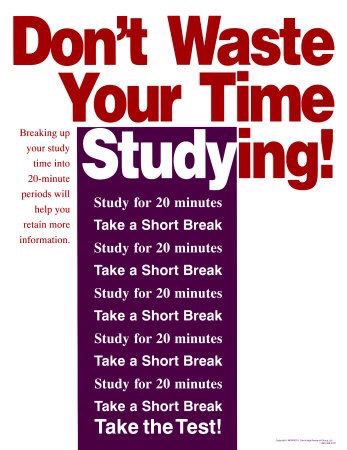
Don’t waste your time studying
Game of Thrones trailer – three weeks to series 5
 PMG Biology