
Category: General
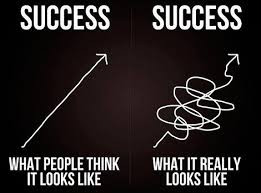
Never forget the pathway to success……

PMG Zondle Zero 3 challenge
Just confirming the playing regulations for my two iGCSE Y11 groups with Zondle. Create an account using the classcode I have given you. Play the games I set for you as many times as you like, collecting “zollars” for high scores but also for repeated attempts.
At the start of next half the student in each class with the most “zollars” will be taken out for lunch at Zero 3 on the High Street and I will pay. If you want to set your own revision quizzes on Zondle, do please have a go. You can see the other games from people in the class under the “games set by my friends” drop down list.
Enjoy – I think this will be a great way to make revision a little more interesting…..

Holiday revision: some PMG tips for Y11 students to maximise the effectiveness of their work
The Easter holidays will be the critical period for all Y11 students preparing for the summer iGCSE exams. The main paper for Biology is so early in May that you need to make good use of time of the holidays. Indeed the majority of your Biology revision should be accomplished before you come back to school in April
Here are some tips in no particular order that might help.
1) Revision is not measured in hours. It is not how many hours you do that matters, it is the benefit you gain from your work. Don’t worry about people who tell you they are doing 10 hours a day – most of their effort will be wasted….
2) What do you need for revision? I suggest you make sure you have all of the following ready for Biology revision this holidays.
- Textbook (absolutely essential as it should now be your main source of information)
- Specification booklet (either the printed version I give you or one downloaded from Firefly)
- Blank paper/cards and coloured pens and pencils (for making summary notes and diagrams)
- Past Paper 1B booklet
- Past Paper 1B mark schemes
3) Active Revision: You all know that reading is a very poor way to revise. The more active and multi-sensory you can be in revision, the more you will learn. Make flash cards that summarise each topic. Use a dictation app to record yourself speaking about the three key ideas in a topic. Make revision videos that you can post to a YouTube channel. Do some of the Zondle revision activities I will set up during the holidays. Leave replies to my blog posts with anything that doesn’t make sense or with any questions you may have. Past papers are best used sparingly in the early stages of revision – your task this holidays is to try to learn as much of the specification as you can. We will look at many past papers and mark schemes next term.
4) Do not revise any one topic for more than 35 minutes. Take a 5-10 minute break and then start something new.
5) Have a plan. I suggest you should aim to work a maximum of 5 hours a day and I think it is best to split the day into three periods of work. 9.15am – 12pm; 2pm – 4.45pm; 7.30pm – 10.15pm. The idea is that every day you always work in the morning slot plus either the afternoon or the evening slot as you prefer.
The plan is good because you want to know that when you are not working, you can relax and enjoy yourself properly. Each revision session is divided into three or four topics, each lasting about half an hour.
Do not ever work late in the evening. Always get up at your normal time and always start work at 9.15am.
6) Do some fun things in the holidays as well as work, but put them into the plan. Exercise is good, spending time with friends is good, eating healthily is good, getting plenty of sleep (8 hours at least a night) is essential.
Basically for this one holiday, you want to trick your body and mind into sticking in “school mode”. Early to bed, early to rise, keep active each day and work hard! The summer term will fly by and you can do a great deal of sleeping and proper relaxing in the months of June, July and August.
Good luck – and keep checking the blog and/or Twitter for new posts and Zondle quizzes
New IGCSE Biology posts on their way….
I am getting quite close to having a comprehensive coverage of the EdExcel iGCSE specification in the various posts on my blog. Here are some of the topics that have yet to be covered. All will be appearing in the next few weeks…..
- Viruses
- Cell Structure
- Mineral Ions in Plants
- Human diet
- The Digestive System in Mammals
- Small Intestine
- Respiration
- Comparison between Sexual and Asexual reproduction
- Cell Division and Chromosomes
- Use of Quadrats
- Air pollution and Climate Change
- Deforestation
- Microorganisms and Food Production
- Growing Crop plants
- Fish farming
- Cloning in Plants
- Cloning in Animals
Please add comments or tweet me with any further topics you would like to see in this blog.
Motivation – a boost needed after half term…
I’m struggling a bit this week to get properly motivated again after half term. Whenever this particular demon strikes, I look for inspiration from people I respect…..

Quiet time on the Blog….
It’s been a quiet few weeks at the start of 2015 for the blog. Life seems more hectic than ever but I can’t work out why…. There are some new iGCSE blog posts on the way on the following topics:
- Homeostasis
- The Kidney
- Thermoregulation
- Nerve Cells and Synapses
- Sexual Reproduction in Plants
- Asexual v Sexual Reproduction
- Blood
- Cardiac Cycle and the Human Heart
- Blood Vessels – (all you need to know)
- Antibodies and Immunity
Please keep checking – they will appear I promise….
2014 in review
The WordPress.com stats helper monkeys prepared a 2014 annual report for this blog.

Here’s an excerpt:
The concert hall at the Sydney Opera House holds 2,700 people. This blog was viewed about 8,600 times in 2014. If it were a concert at Sydney Opera House, it would take about 3 sold-out performances for that many people to see it.

Three great Biology books to read over the Christmas holidays
It is one of the really good things about the extended curriculum at my school that students are not set work to do in the holidays. This allows time at home to be spent resting, recuperating and preparing for the term ahead. But can I make a suggestion as to what some of you might like to do before the start of next term? Find a really good book to read and read a chapter a day. Here are some personal suggestions as to some of my favourite Biology books.
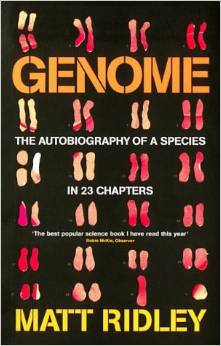
“Genome” by Matt Ridley is a really interesting read. I have read it over and over again since it was first published in 2000. The chapters are short but the ideas contained within are important and challenging. The 23 chapters are each devoted to a single gene on a different human chromosome but Ridley is able to draw out some deep ideas with entertaining stories, anecdotes and superb detail. I would say this is ideal for either Y11 (D block) or Y12 (C Block) students.
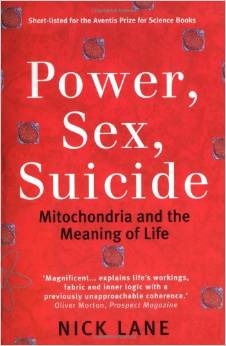
Nick Lane came to Eton last year to speak to the Scientific and Banks Societies and he was about the best speaker we have had for a long time. This book is more suitable for Y12/13 students than GCSE readers as it has direct links to the pre-U course and contains some complex ideas. He is interested in the role mitochondria have played in the history of life and for me, Nick Lane is the best contemporary writer. If you like this, I can also recommend his later book “Life Ascending” which is also a super read.
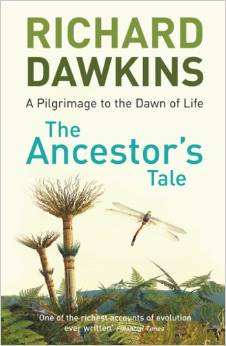
This is my favourite Dawkins book. If you are interested in understanding the grand sweep of the tree of life and the history of life on our planet, there are a lot worse ways to start than reading this. Dawkins has a superb writing style and is able to make a complex chronology of species entertaining and easy to follow. If you do read any of these books and would like to tell me your thoughts, or indeed if you have other recommendations, please add a comment to this post so that others can see.
Happy Christmas!
The World is Changing – 2011 video showing our changing planet
Great advice – I just wish I could follow it….

 PMG Biology